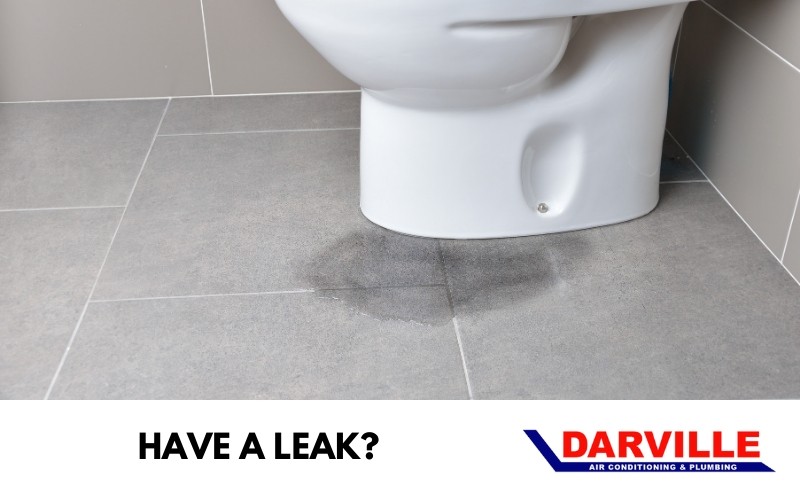
water gathering around the base of a toilet from a leak

Have a Leak?

A leak in your home or office can be daunting. What can be even worse is if you’re not sure whether or not you have a leak, or how bad it is. Worse still, how bad could it be? Leaks often start in walls, ceilings, or floors, causing damage you don’t even know about for months. In today’s post, we’ll take a look at some easy ways to tell if you have a leak, and what you can do about it.

WATER BILL HIKE

Your water bill is bound to ebb and flow throughout the year. For example, it’ll likely be higher in the summer when you’re watering your lawn more often. But a sudden, consistent increase in your monthly bill could be a sign of trouble. Compare your bill to the same month the previous year. If it seems a lot higher, you may have a leak.

TICKING WATER METER

Tick, tick, tick could mean drip, drip, drip. If your meter is ticking, even when you’re not using water, you probably have a leak. Don’t forget it could be under a sink, in the ceiling, or even on an external sprinkler line.

HOLY MOLDY

Mold and mildew can also be a sign of a leak. Damp spots on your floors, ceilings, and walls can turn to mold if they stay wet due to a leak. A musty smell can mean that mold or mildew is behind a wall and can’t be seen. Unfortunately, if you can’t see it, it’s unlikely you’re doing anything to clean it.

CRACKS IN FOUNDATION

Seeing a crack in a wall or ceiling can cause one of the worst feelings for a homeowner. In most cases, they are actually nothing serious, but they could be. A home will naturally settle over time, and that could cause some cracking in the drywall. However, big or newer cracks that seem to appear overnight could be due to leaky pipes.

WET SPOTS

If areas around the sink, tub or toilet are continuously wet, you likely have a leak. Inspect them carefully to determine if there’s an issue.

The Darville Company can help determine if you have a leak, and if so, we can help you get it repaired. Call us today at 432-580-9675. The Darville Company is the Higher Standard.

When To Replace Plumbing

Like all home improvement projects, major plumbing work costs time and money. At the Darville Company, we know how valuable these things are to you and your family. That’s why it’s important to know exactly what work is necessary, especially if you’re considering a major overhaul like replacing your plumbing system. An all-new system can be a large investment, but it could save you from major damage should something go wrong.

In this post, we’ll take a look at some of the things to look for when making the decision to replace plumbing.

KNOW YOUR PIPES

Depending on the age of your home, different materials may be used in the plumbing piping throughout your home. If you’re not sure what kind of pipes are used, you can always find out by looking at the inspection report from when you first purchased the home. Each type of pipe has a lifespan:

Copper – 50+ years

Brass – 40-45 years

Cast Iron – 75-100 years

Galvanized Steel – 20-50 years

PVC Piping – indefinitely!

Even if your home’s age doesn’t come close to the lifespan of some of the pipes, you still have to consider things like pipe joints and fittings, as well as mechanical components. Compromised pipes can lead to leaks – or worse.

WARNING SIGNS

If you notice your pipes cracking or leaking, that’s an obvious warning sign. Corrosion around fixtures is also a red flag. Other signs: wet baseboards, water behind the toilet or sink, damaged flooring, or rust-colored corrosion.

Low water pressure can be the result of multiple problems. A rattling sound from your sink, combined with low water pressure can be a sign of blockage in pipes that may indicate the need for repair.

REPAIR OR REPLACE PLUMBING

Blocked pipes or faulty fixtures don’t require full replacement. Generally, a major repair is one where walls need to be removed in order to access the problem areas. This is why some homeowners invest in new plumbing at the same time that they refurbish their kitchen or bathroom.

If you’re considering replacement or repairs, The Darville Company can help. Call us today at 432-580-9675 or schedule an appointment online. The Darville Company is The Higher Standard.

Maintain Your Drain

Like with most home maintenance, taking care of your drains is important to help prevent future problems. Sometimes there could be an issue below the sink that you can’t even see. By the time you realize there’s a problem, it could be too late. You can avoid issues and expensive repairs by practicing routine maintenance, and prevent putting money go down the drain.

DRAIN CLOG PREVENTION

The most obvious evidence of issues with your drains or pipes is a clog. Here’s a quick list of items that you should keep from going down any drain.

  • Hair
  • Coffee Grounds
  • Soap Scum
  • Cooking grease

Even if you have a garbage disposal, any of these items could clog up your drain. Some could even damage your garbage disposal. In the bathroom, keep hair and soap scum out of sinks and tubs. You can get a shower drain protector online for $10 or less. Keeping those drains clear will make a big difference in preventing clogs.

WHAT TO LOOK FOR

The first and most obvious way to identify a clog is a slow drain. If water is draining at a slower than normal speed, you probably have a clogged drain. It’s easy to tell just by looking. Another way to spot, or should we say “smell,” a problem is a bad odor coming from your kitchen or bathroom drain. That indicates that food or other debris is stopped up, rotting, and stinking up the place! Finally, if you hear gurgling from your drains, or your toilet is backing up instead of flushing, you know you’ve got a problem.

WE CAN HELP

If your drain performance is going down the tubes, give The Darville Company a call. We have the knowledge and experience to help you with all your plumbing needs. Call us today at 432-580-9675 or schedule an appointment online. Darville is the Higher Standard.

R.O. or Water Softener

Hard water is a problem here in West Texas. The Darville Company offers a variety of solutions. Two of the most popular solutions that we offer are water softeners and reverse osmosis systems. Though they produce similar results, there are some differences between these two systems. In this post, we’ll explore the differences to see which one is right for you.

REVERSE OSMOSIS (R.O.)

Reverse osmosis purifies your water, while water softeners soften your water. The R.O. process is basically an advanced filter. By running your water through a semipermeable membrane, reverse osmosis systems filter out contaminants and minerals. R.O. systems are typically installed for single-faucet use, most often underneath the kitchen sink. R.O. focuses mainly on improving the taste of water used for drinking and cooking.

WATER SOFTENERS

So if R.O. takes the bad stuff out of your water, water softeners put the good stuff in. Water softeners actually add negatively-charged ions to the water. The ions attach themselves to the sodiums and potassiums that make the water hard. The ions breakdown the deposits, minimizing the effect they have on your water. Water softeners are usually installed on your water tank, so they will soften water throughout your home.

USE BOTH?

As you can see, R.O. and water softening systems are slightly different. The good news is that you can use both together to maximize the water quality in your home. Treating the water with a softener before it even gets to the reverse osmosis system will make the R.O. filter last even longer. Using both systems will provide the best-tasting water for drinking, while still providing soft water for bathing, which is also good for your pipes, faucets, and other water-based appliances.

CALL US

Lucky for you, The Darville Company has state-of-the-art options for both reverse osmosis and water softeners. Call us at 432-580-9675 to make an appointment. The Darville Company is the higher standard!

Improving Air Quality

Aging or leaky air ducts can have a major impact on your HVAC unit’s efficiency and the air quality in your home. Allowing extra air can make your air less clean and leave a layer of dust throughout your home. In West Texas, we have enough dust on the outside – we don’t want it on the inside!

OUR AIR QUALITY SOLUTION

The Darville Company offers a solution: REME HALO. The REME HALO system is designed to filter air while it’s still in the ducts. The experts at The Darville Company install the REME in your HVAC system, so by the time the air gets to your living spaces, it’s clean and ready to keep you comfortable! It’s great if you’re looking for a way to reduce the impact of allergies on those in your home.

HOW IT WORKS

The REME HALO works by sending ionized hydro-peroxide into the air. The chemicals will attach themselves to dust, bacteria, viruses, mold, or anything else that causes a bad odor or discomfort from your air supply. Your air filter then captures the molecules that the hydro-peroxide collects.

Your filter will fill get full quickly, but this means that the air that is getting through is clean. Any unhealthy particles that do make it through the filter will be broken down by the chemicals and cleared from your home. You’ll need to change your filter more often, but you’ll notice the difference with cleaner air in your home. The hydro-peroxide is all-natural and totally safe.

FLU SHOT FOR YOUR HOME

The Darville Company experts are fully trained to properly install the REME HALO system. Just like the flu vaccine protects you from getting sick, we believe the REME HALO is a flu shot for your home. If you’re ready to improve your air quality and reduce dust and allergies, call The Darville Company today at 432-580-9675!

What is a “MERV” Rating?

Do you know what ZIP in ZIP code stands for? What about SCUBA? You are probably familiar with these terms, even if you don’t know what the letters stand for. At the Darville Company, we know all about HVAC (Heating, Ventilation, and Air Conditioning), but we deal with other acronyms, too. One of those is the MERV Rating.

WHAT IS MERV?

MERV stands for Minimum Efficiency Reporting Value. The MERV rating ranges from 1-16 and is assigned to HVAC filters. The number represents a scale that measures the filter’s ability to remove particles from the air moving through your system. These particles can be between .3 and 10 microns in size! We’re talking things like dust, pollen, cigar smoke, and some particles you can’t even see. Most home filters have a MERV rating between 7 and 12, while a filter in a place like a hospital is more likely to be rated between 13 and 16. 

It’s important to know that a HIGHER rating, is not necessarily a BETTER rating. What’s important is that the rating of the filter matches the output and the power of your HVAC. The unit and the filter need to work together to create maximum efficiency and comfort for you!

CHANGING FILTERS

As with any kind of filter, your air filter needs to be changed occasionally. Filters with higher MERV ratings need to be changed a bit more frequently. You can change air filters on your own, but it may take some know-how to make sure you get the right one. The Darville Company has the experts you need to make sure you pick the right filter to fit your system. Give us a call today at 432-580-9675. The Darville Company is the higher standard!

ANSWERS

If you’re still wondering, ZIP stands for Zone Improvement Plan, and SCUBA stands for Self-Contained Underwater Breathing Apparatus. Give us a call today!

WaterTech Pro Series

Here’s a story from a friend of The Darville Company:

“I remember when I first moved to Odessa years ago. I was all moved into my new apartment (they were a lot cheaper back then). After getting situated, I realized something was missing. My fridge didn’t have an ice maker. When I told the ladies in the office, they said, “Honey, you’re not from here, are you? You wouldn’t drink the water around here or make ice with it.”

Luckily The Darville Company has products that can help.

HARD WATER

Hard water is a reality in West Texas. There’s not a ton you can do to prevent it from damaging your home. 

Scientifically speaking, water is H2O. But “hard” water is created when that H2O mixes with minerals on your way to coming out of your tap. About 85% of all U.S. homes are said to have hard water, though in some areas, it’s worse than others. The Permian Basin is one of those areas.

THE SOLUTION

So if playing with the science of your water is the problem, then there must be a scientific solution, right? RIGHT! Welcome to the world of water treatment. That’s the process of purifying your water, by taking out many of the minerals that cause it to be hard.

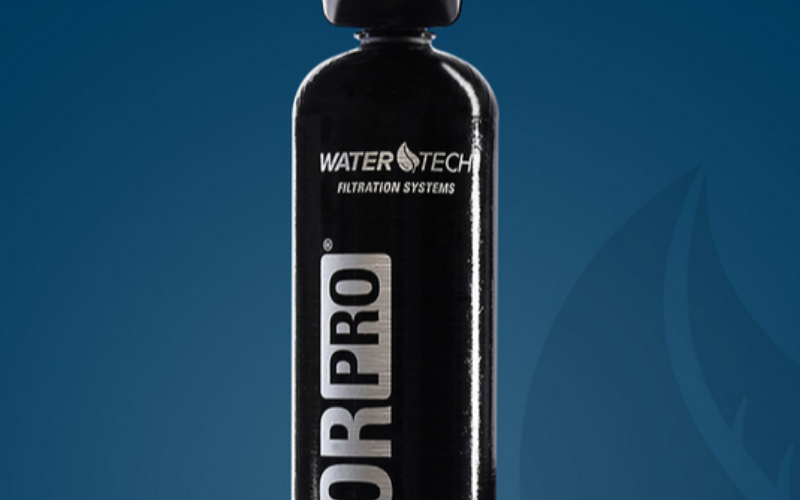
WaterTech offers a variety of ways to combat hard water, with its line of water conditioners, softeners, and reverse osmosis products. Some, like the REIONATOR PRO and SOFTMAX PRO focus on filtering your water for use in showers and sinks. Others, like the RO PUREPRO, make your water better tasting and safe to drink. This is exactly what our friend needed when they moved to Odessa!

HOW WE CAN HELP

The Darville Company is proud to offer the full line of WaterTech Pro Series products for sale or rent. Give us a call and schedule a consultation with one of our experts to begin the move to better water. The Darville Company is the higher standard! Call 432-580-9675 for an appointment today!

water pooling in home because of a slab leak

How to Identify a Slab Leak

It’s something every homeowner dreads, but here at The Darville Company, one of our most common service calls is in response to a slab leak. In this post, we’ll tell you what they are, how to identify them, what to do, and how we can help.

WHAT CAUSES A SLAB LEAK?

Like the name implies, a slab leak involves a leak that impacts your “slab,” also known as the concrete foundation of your home. It happens in the same way as a lot of the other plumbing issues we’ve discussed in other blogs. 

Some of the pipes that bring water to and from your home actually go right through your slab. Like pipes in your yard, attic, crawl space, or wall, they wear and can become corroded, eventually leaking or becoming clogged. In extreme situations, they can even explode. Any of these scenarios can damage your slab.

WHAT IT MEANS

A damaged slab can throw your whole home off balance – literally! Damage to the foundation could cause parts of your home to sink. If left untreated, a leak could also lead to mold. Gross!

SPOTTING A SLAB LEAK

Since a slab leak is literally happening underneath your house, they can be tricky to spot. Here are a few signs you can look for:

  • Sudden increase in water usage/bill
  • Pooled water
  • Damp carpet or damaged flooring
  • Mold/mildew (you may see or smell it)
  • Loss of water pressure
  • Hot water heater constantly running

HOW WE CAN HELP

The Darville Company has the experts you need to inspect and repair your slab, and make sure it will remain safe and dry for years to come. More good news: some homeowner insurance will cover the cost of slab leak repair. Obviously, you’ll need to check your policy, but that sort of coverage is not uncommon. If you need slab repair, call The Darville Company to schedule your appointment today at 432-580-9675. The Darville Company is the higher standard!

Equipment Spotlight: American Standard Heating & Air Conditioning

Here at The Darville Company, we are the Higher Standard. We take pride in America, so we’re proud to offer the very best American-made products. One of the best examples of this is our long-running partnership with American Standard. Darville offers a full complement of American Standard products, including:

  • air conditioners
  • air handlers
  • coils
  • furnaces
  • heat pumps
  • packaged systems
  • ductless systems and mini-splits
  • thermostat controls
  • air quality products
  • zoning products

Also, each product includes competitive warranty options.

ABOUT AMERICAN STANDARD

American Standard is a quintessential American company. Hard work, quality products, and good service have made American Standard a staple in homes and businesses for 90 years. Their focus on energy efficiency and total home comfort falls right in line with the expectations we have for product performance.

AIR CONDITIONING OPTIONS

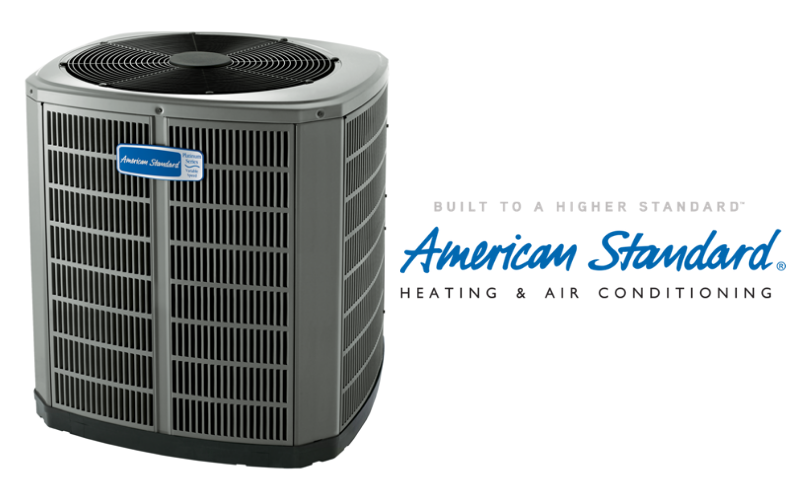
One of the premier products that we offer is American Standard air conditioners. They are designed to not only keep you cool, but to save you money while doing it. Whether you’d like the most efficient, quietest, or highest-value unit, we can find the one that is best for you. Among these options is the new AccuComfort series of air conditioners. 

The AccuComfort Variable Speed Platinum 20 consistently adjusts not only for temperature, but to make sure your unit isn’t overworking. This keeps you comfortable and saves you money at the same time. 

If noise is a problem, try the AccuComfort Variable Speed Platinum 18. The system runs efficiently like the Platinum 20, but with the quietest operation noise compared to any competitor unit.

Or maybe it’s value you’re looking for. American Standard’s Silver 14 Air Conditioner could be the perfect fit. It’s quiet and efficient, all at an affordable price. If you are interested in any of American Standard’s HVAC systems, call Darville today at 432-580-9675 or reach out through our Contact Form! Darville. The Higher Standard.

A/C Being Checked

When Is It Time to Get Your A/C Checked?

Here in the Permian Basin, we’re used to seeing hot temperatures ALL. SUMMER. LONG. 2019 has been no different. It was at or above (sometimes way above) 90 virtually every day. If you’re like us, you rely on air conditioning to keep you cool all summer long. But the fall is finally here! If it’s been running strong, do you even need to get your A/C checked? Here are some tips so you’ll know.

How Often Should I Have My A/C Unit Checked?

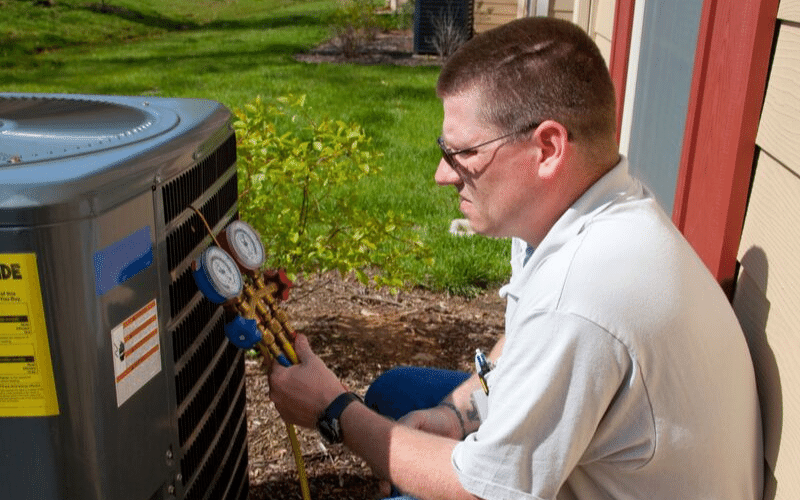
It’s generally recommended that you get your whole system checked at least once a year, but once in the Spring and once in the Fall is optimal. For starters, an expert inspection will catch things that a regular homeowner might miss. For example, a small leak anywhere in your system might not cause any discomfort now, but if it’s not caught and fixed soon, it could become a major, and potentially expensive, problem. Things like a clog in your drain line won’t impact your cooling but could cause problems in your attic if not addressed in a timely manner.

What Does The Inspection Include?

Some of the things you can expect from an inspection for the Fall include: 

Replace standard filter or wash air cleaner, inspect & adjust all belts & pulleys, inspect heat exchanger, flue assemblies, burners & draft diverters in season as necessary, electronically test for poisonous, deadly carbon monoxide gas in the heating season, check operation of electric heat strips & fuse links, test and check operating temperatures, clean the pilot assembly & test flame, test for gas leaks at furnace connections, ensure your unit is in good working condition.

What’s The Benefit?

A regular inspection can determine and boost the general efficiency of your unit. Even if it’s just a tune-up, the increased efficiency will help your unit run more smoothly, and could easily save you $100 or more in energy costs over the course of a year.

The Darville Company has been serving Odessa, Midland, and the entire Permian Basin for over 70 years. Call us today at (432) 580-9675 to schedule your HVAC inspection. You’ll be glad you did. The Darville Company is The Higher Standard.